Galvanized steel — the one to actually worry about
Common in homes built before the 1960s-70s, galvanized pipe corrodes from the inside out, which means it can look fine from the outside while the interior diameter is slowly closing up with rust. That shows up as steadily weakening water pressure over years, discolored water (especially after the house sits unused for a bit), and eventually pinhole leaks. There's no coating or treatment that reverses this — it's a matter of when, not if, sections start failing.
Copper — generally solid, but not immune to problems
Copper is durable and was the standard for decades, but it isn't maintenance-free. Pinhole leaks can develop from water chemistry issues (particularly with certain well water or acidic water), and older soldered joints can fail over time. If your home has copper and it's been trouble-free, that's a good sign — but copper age alone isn't a reason to panic the way galvanized age is.
PEX — what most new work uses now
Flexible, resistant to the corrosion that kills galvanized pipe, and easier to route through existing walls without extensive demolition. It's what we use for most repipe work today. It's not indestructible — UV exposure and rodents can damage exposed runs. One thing worth knowing from the field: if you have a rodent problem, skip the poison. Poisoned rodents get desperately thirsty and will chew through plastic pipe searching for water — we've seen the damage. Use traps instead, especially anywhere near plastic plumbing. And rodent damage isn't covered by anyone's warranty (ours or the manufacturer's) — it's outside damage, not a defect — so prevention is genuinely the cheap option here.
How to know what you actually have
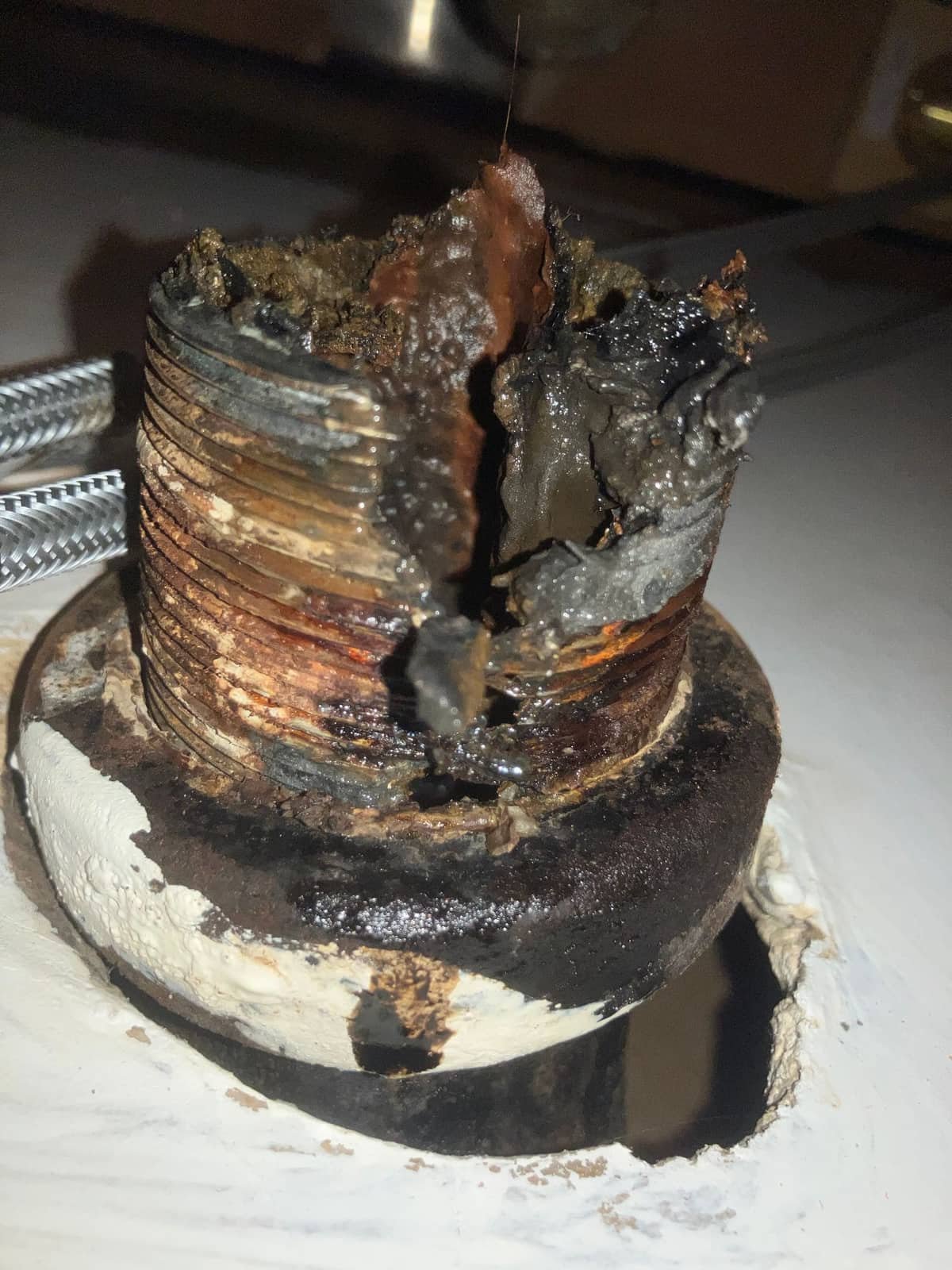
Check an accessible section — a basement, crawlspace, or under a sink. Galvanized is dull gray steel, often with visible corrosion at joints (the photo above is a real example from a Puyallup inspection). Copper is reddish-orange metal. PEX is flexible colored tubing, usually red, blue, or white. If you're not sure, or you're seeing any of the pressure/discoloration signs above, a quick inspection tells you exactly what's in your walls and whether it's a wait-and-see situation or one worth planning for.